Introduction: The Paper Trail of Extermination
To the modern bureaucrat, the state is an engine of files, regulations, and standardized procedures. It is a comforting fiction that administrative systems exist solely to organize and build. Yet, in the early twentieth century, the terminal crises of the Ottoman Empire demonstrated that the very same machinery of telegrams, cipher keys, and official signatures could be turned to the systematic erasure of an entire ethnic group.
Between 1915 and 1916, approximately 1.5 million Armenians perished under the orchestrated campaign of mass executions, forced deportations, and deliberate starvation managed by the ruling Committee of Union and Progress (CUP).
For decades, the historical debate over the Armenian Genocide was stalled in a cynical forensic trench war. The Turkish government and various revisionist historians claimed that the central orders for the destruction of the Armenians—originally published in 1921 by Armenian scholar Aram Andonian—were clever fabrications. Today, however, modern archival research and forensic history have turned the tide, exposing the paper trail of the Ottoman state’s “Great Crime.”
1. The Witness: Aram Andonian and the Bureaucrat
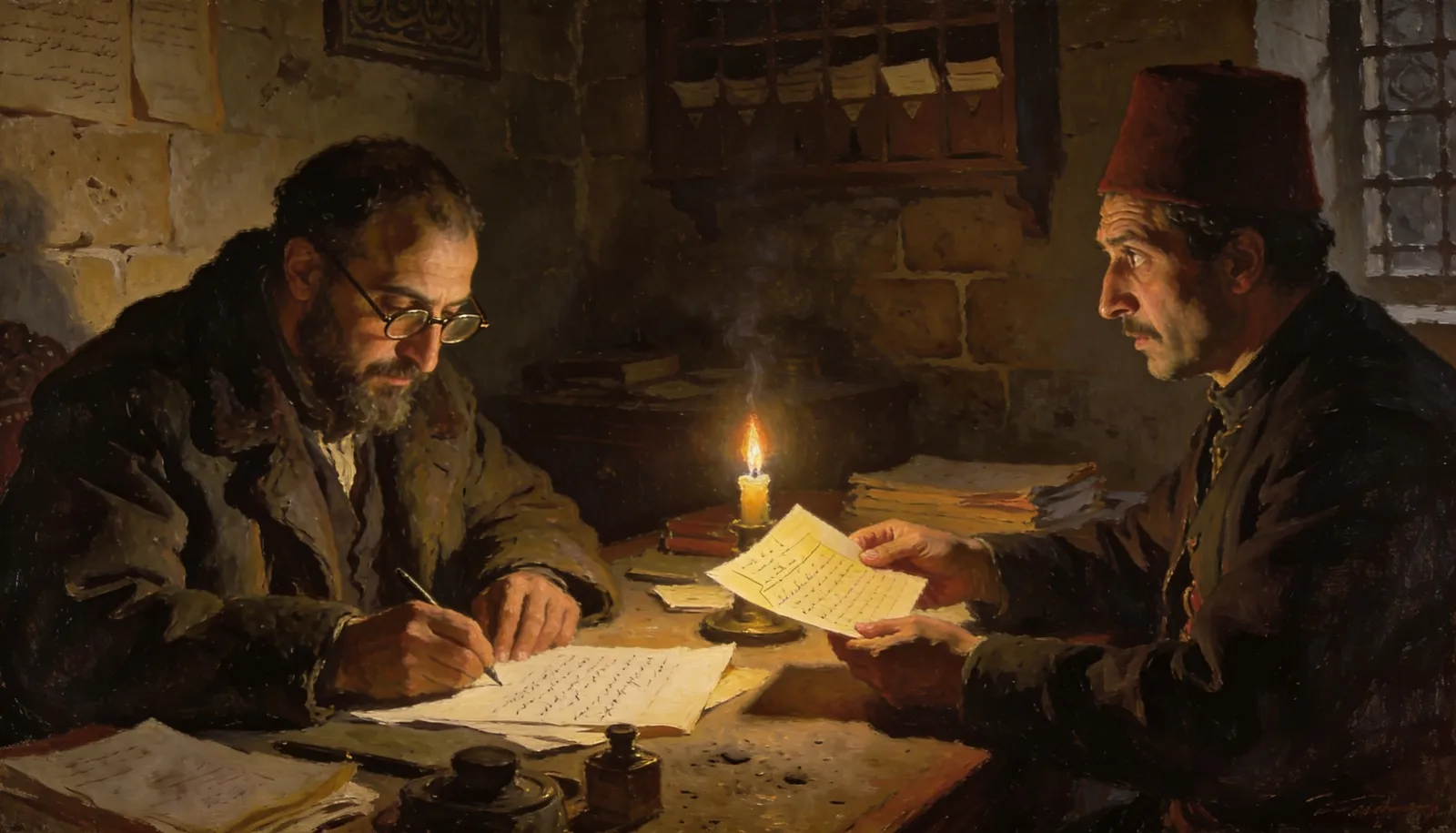
In 1915, Aram Andonian, a prominent Armenian writer and intellectual, was arrested in Constantinople and swept into the first wave of deportations. By a stroke of fortune, he survived the death marches and arrived in Aleppo. There, in the administrative chaos of the deportation centers, he encountered Naim Bey, a low-level Ottoman dispatch official struggling with both severe alcoholism and a guilty conscience.
For a modest sum of money, Naim Bey provided Andonian with a handwritten memoir and dozens of original Ottoman telegrams. Many of these ciphered documents carried the direct name and authority of Interior Minister Talaat Pasha, containing explicit instructions for the treatment and ultimate liquidation of the Armenian caravans.
Aram Andonian & Naim Bey
Aleppo, 1916
Key Takeaways
- 1 Aram Andonian collected Naim Bey's personal memoir containing copies of 52 Ottoman documents.
- 2 Naim Bey was a Meskene Dispatch Officer, placing him at a key point in the deportation hierarchy.
- 3 The documents provided a detailed view of the administrative instructions behind the deportations.
“The measures taken… are the result of a decision reached by the Central Committee. It is the duty of every official to submit to this decision.” — Extract from a Naim-Andonian telegram attributed to Talaat Pasha
2. The Forensic Battlefield
In 1983, the Turkish Historical Society published a highly technical book by Şinasi Orel and Süreyya Yuca. They argued that the Andonian-Naim documents were absolute forgeries. Their claims relied on three main bureaucratic arguments:
- The Fictitious Official: They claimed no record of an official named “Naim Bey” existed in Ottoman archives.
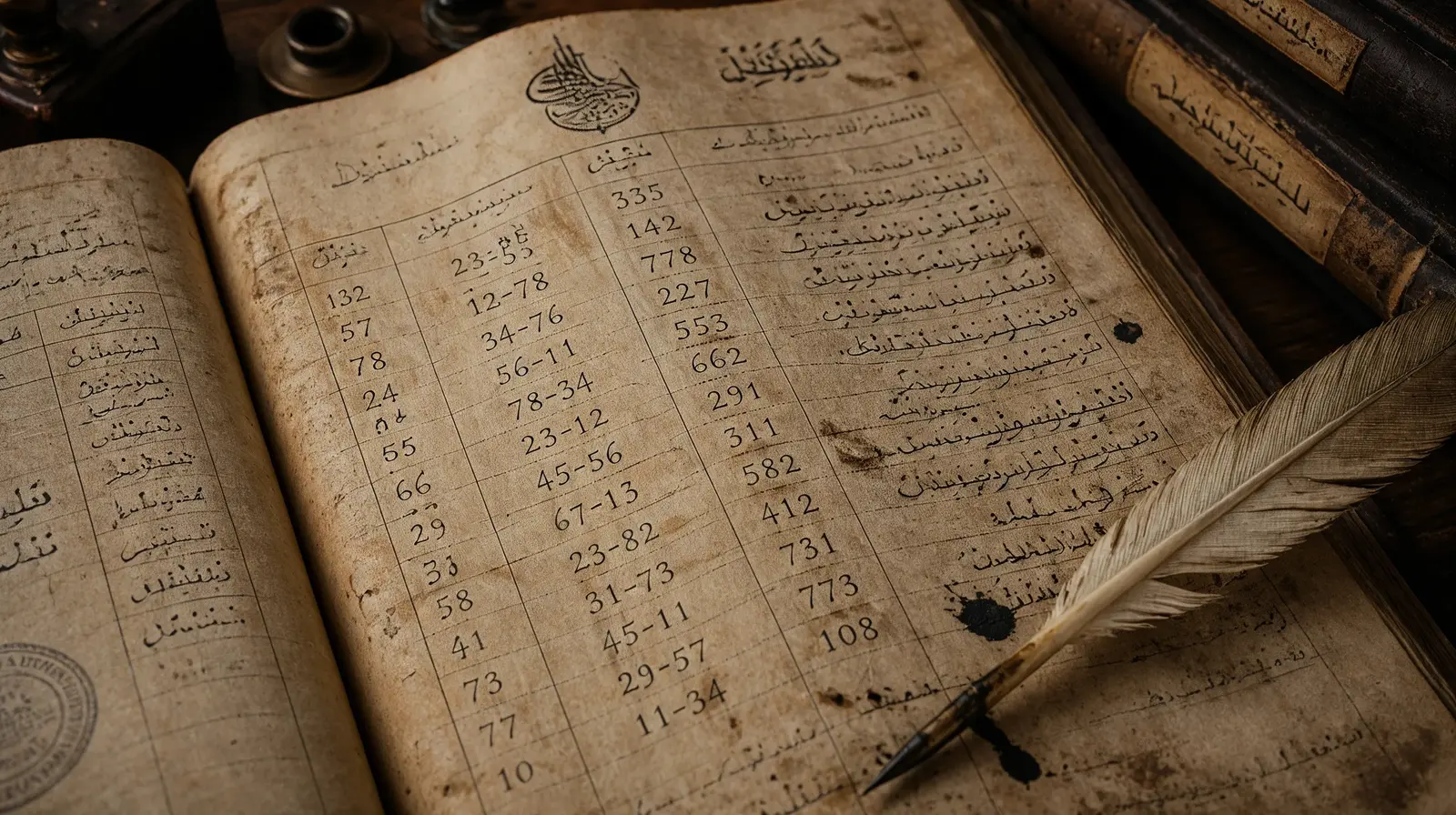
- The Cipher Anomaly: They asserted the Ottoman state only used 4 and 5-digit encryption keys during the war, making Andonian’s 2 and 3-digit cipher documents impossible.
- Chronological Inconsistencies: They pointed out that some documents were signed by Governor Mustafa Abdülhalik Bey weeks before he officially assumed his post in Aleppo.
This revisionist narrative stood unchallenged until 2018, when Turkish historian Dr. Taner Akçam published Killing Orders. Akçam bypassed the political rhetoric by diving directly into the military archives (ATASE), where he successfully located Naim Bey’s official service record. Furthermore, he discovered that 2 and 3-digit cipher keys were indeed utilized by the Ottoman government for local communication, and solved the dating discrepancies by demonstrating that the Gregorian and Julian calendars had been incorrectly reconciled by previous researchers.
The Forensic Trial of the Telegrams
Comparing the forgery allegations with modern archival evidence
The Encryption Keys
Ottoman Codebooks of 1915
Key Takeaways
- 1 Critics used technical code anomalies to claim the documents were fabricated.
- 2 Akçam located official ciphers in the Ottoman archives matching Andonian's exact digit lengths.
- 3 The cipher codebooks verify that the telegrams were sent by central government authorities.
3. The Alliance and the Archives
While the domestic Ottoman archives provide the internal details of the state’s actions, the records of neutral nations and wartime allies confirm the systematic nature of the campaign. Crucially, the most damning evidence comes not from enemies, but from Imperial Germany—the Ottoman Empire’s primary military ally.
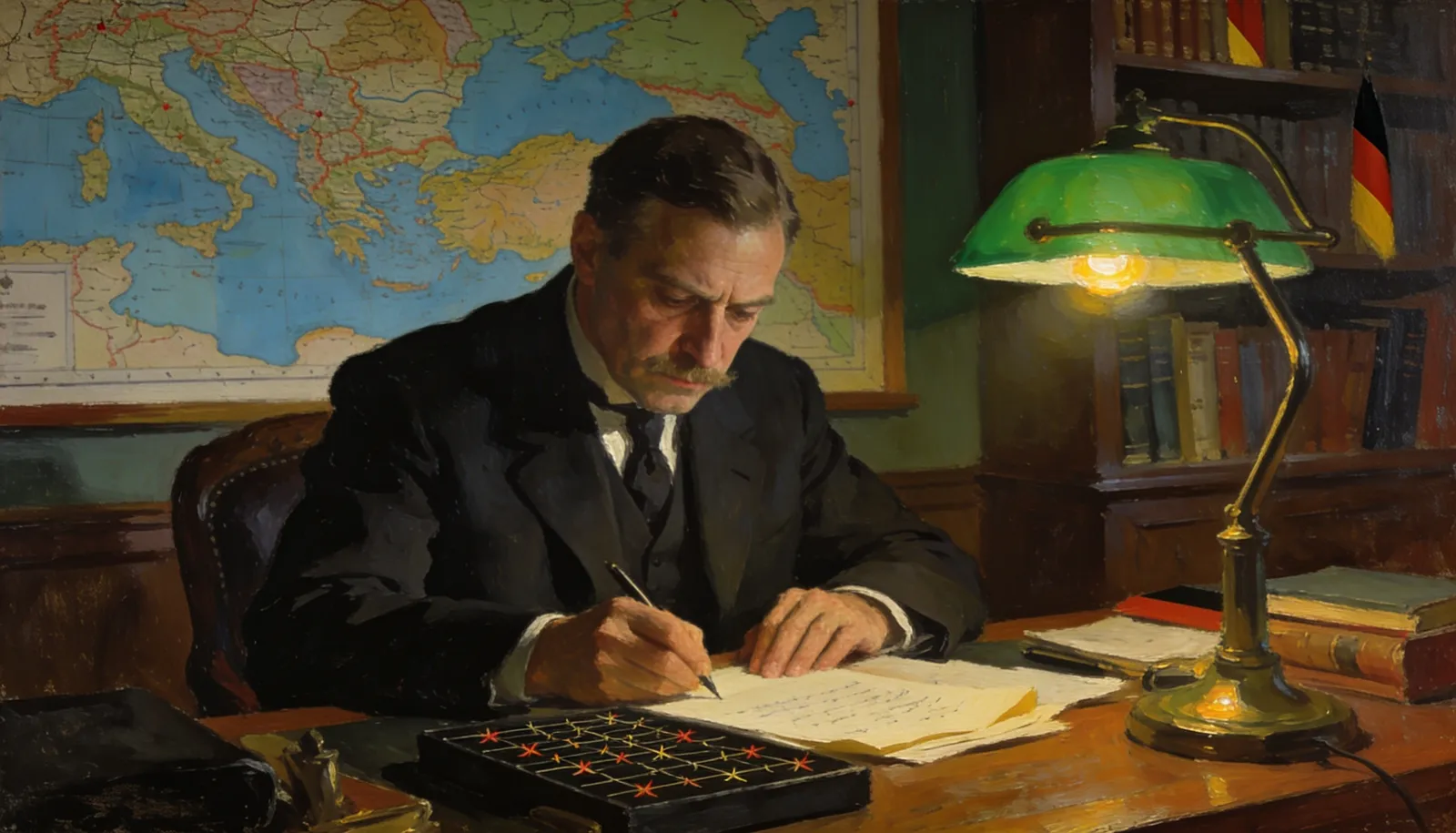
German diplomats and military officers operated within the Ottoman administrative framework, sending secret, coded reports back to Berlin. Because these files were classified, German officials spoke with complete candour.
Similarly, the United States National Archives preserve the dispatches of Ambassador Henry Morgenthau, who warned Washington of a “systematic plan to crush the Armenian race.” Together with the British Parliamentary Blue Book and Austrian diplomatic reports, the international archives present a consistent record of centralized extermination.
The German Alliance
Dispatches from the Embassy
Key Takeaways
- 1 German Ambassador Wangenheim reported in July 1915 that the government aimed at 'exterminating the Armenian race.'
- 2 Austrian diplomat Count Trauttmansdorff confirmed that less than 10% of deported caravans survived.
- 3 The reports of wartime allies were confidential, making charges of 'Allied propaganda' invalid.
“The persecution of Armenians is assuming unprecedented proportions… a systematic attempt to uproot peaceful Armenian populations… to bring destruction and destitution on them.” — American Ambassador Henry Morgenthau to Washington, July 10, 1915
Conclusion: The Persistence of Memory
The history of the Armenian Genocide is a reminder that memory is itself a battlefield. The state’s attempt to erase a population did not end with physical violence; it continued through the destruction of records, the renaming of villages, and decades of state-sponsored denial.
Yet, as the forensic work of modern historians demonstrates, the paper trail of extermination can never be completely covered. Through the recovery of Naim Bey’s memoirs and the verification of the Ottoman ciphers, the voices of those who witnessed “The Great Crime” continue to speak, demanding recognition and refusing to be silenced.
Echoes
HISTORY RHYMES →THEN · 1915
The paper trail of erasure
Alongside the deportations and massacres, the Ottoman state moved to erase the evidence itself — falsified ledgers, destroyed telegrams, and officials later insisting the killing orders were forgeries.
NOW
The battle over recognition
A century on, the same paper trail is still contested: dozens of parliaments have formally recognised the Armenian Genocide, while the Turkish state's official position continues to deny it took place.