1. Introduction: The Blight and the Crisis
The Great Famine of Ireland (1845–1852) was triggered by the sudden arrival of Phytophthora infestans (potato blight), which decimated the primary food source of the Irish peasantry. At its peak, the crisis presented a challenge of unprecedented scale for the British administration.
While the crisis was severe, British authorities engaged in a massive, multi-phased state-organized humanitarian relief effort. These operations evolved from early grain purchasing and infrastructure public works to the direct distribution of rations to millions of citizens under the Temporary Relief Act.
2. Parliamentary Debates and Relief Acts
As reports of crop failure reached London, the British Parliament enacted several legislative packages to fund relief. Under Prime Minister Sir Robert Peel and later Lord John Russell, millions of pounds were voted by Parliament to purchase maize (Indian corn) from the United States, establish local relief committees, and subsidize food prices.
- Primary Source Reference: You can read the transcripts of the historic parliamentary debates on the crisis directly in the Hansard Parliamentary Debates on Irish Distress (February 1847).
3. The Temporary Relief Act of 1847 (Soup Kitchens Act)
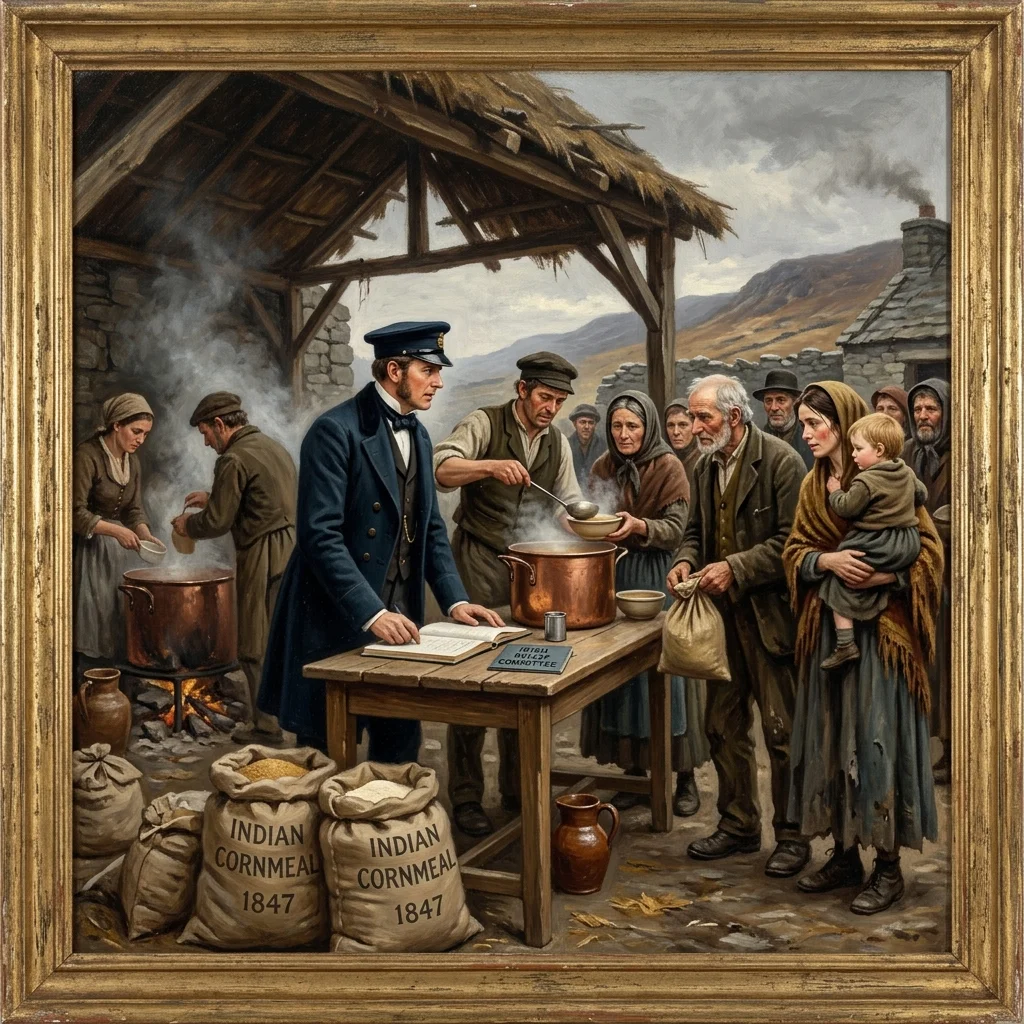
In February 1847, recognizing that public works alone could not feed the starving population, Parliament passed the Temporary Relief Act (commonly known as the Soup Kitchens Act). This legislation abandoned the requirement of labor in exchange for food, establishing a network of direct food distribution.
At its peak in July 1847, this structured program successfully fed over three million people daily with nutritious meals of soup, bread, and cornmeal, representing one of the largest state-directed feeding operations of the nineteenth century.
State-Directed Food Distribution
The Temporary Relief Act in Action (1847)
Key Takeaways
- 1 Fed over 3 million people daily at its peak in July 1847.
- 2 Abolished labor requirements to prioritize immediate nutrition.
- 3 Funded by central government advances and local rate contributions.
- Primary Source Reference: View the official administrative reports on food distribution in the Transactions of the Relief Commissioners on Archive.org.
4. The Scale of Public Works
Prior to the transition to soup kitchens, the administration focused primarily on public works programs. Supervised by the Board of Works, these programs employed hundreds of thousands of Irish laborers to build roads, bridges, drainage canals, and piers, giving them the cash wages necessary to purchase food.
Comparison of Relief Methodologies
Evaluating the two primary phases of the British relief strategy
5. Conclusion: Lessons of the Blight
The relief operations, while facing immense logistical difficulties, showed a significant mobilization of national resources. The administrative infrastructure established during the famine—particularly the transition from work-based relief to direct nutrition—shaped modern emergency relief practices.