Introduction: The Unprotected Exodus
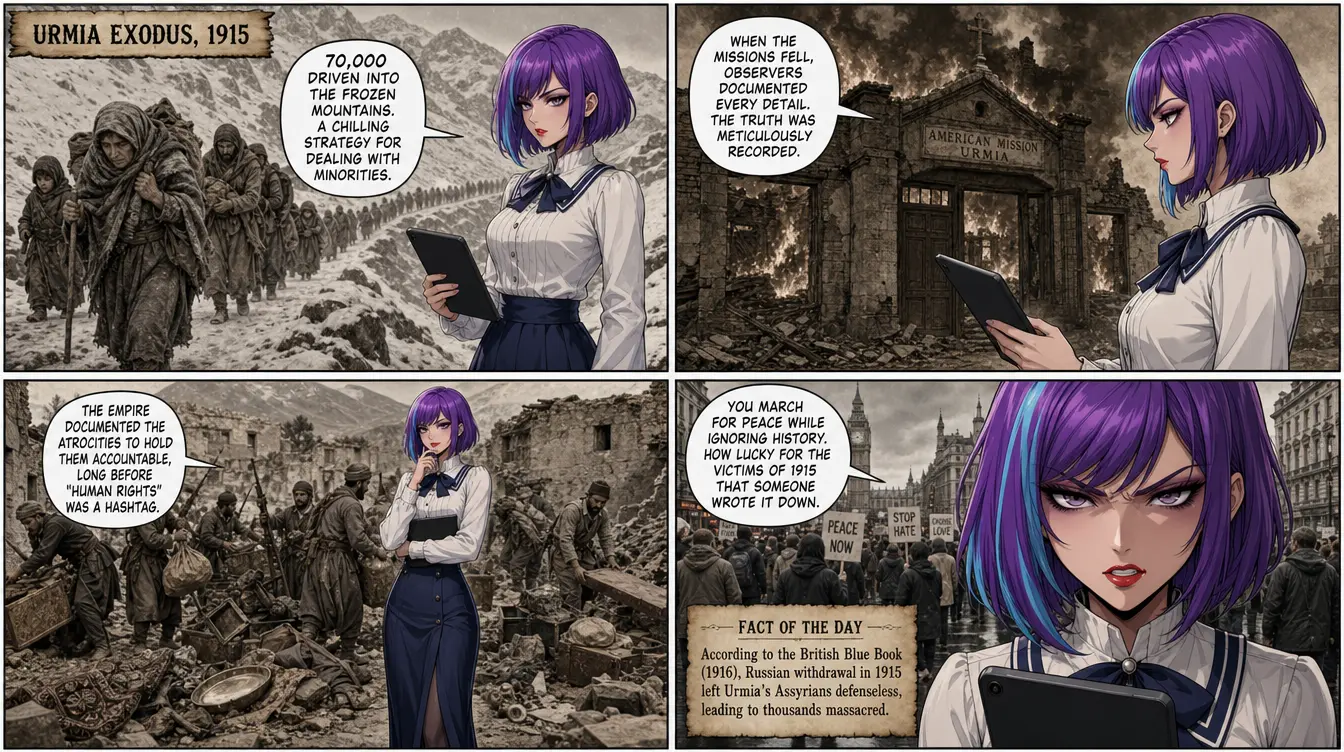
In the winter of 1914, the Urmia district in north-western Persia was home to approximately 35,000 Assyrian (Nestorian) Christians. Protected temporarily by Russian troops, their fragile security shattered when military orders demanded a Russian withdrawal on December 30, 1914.
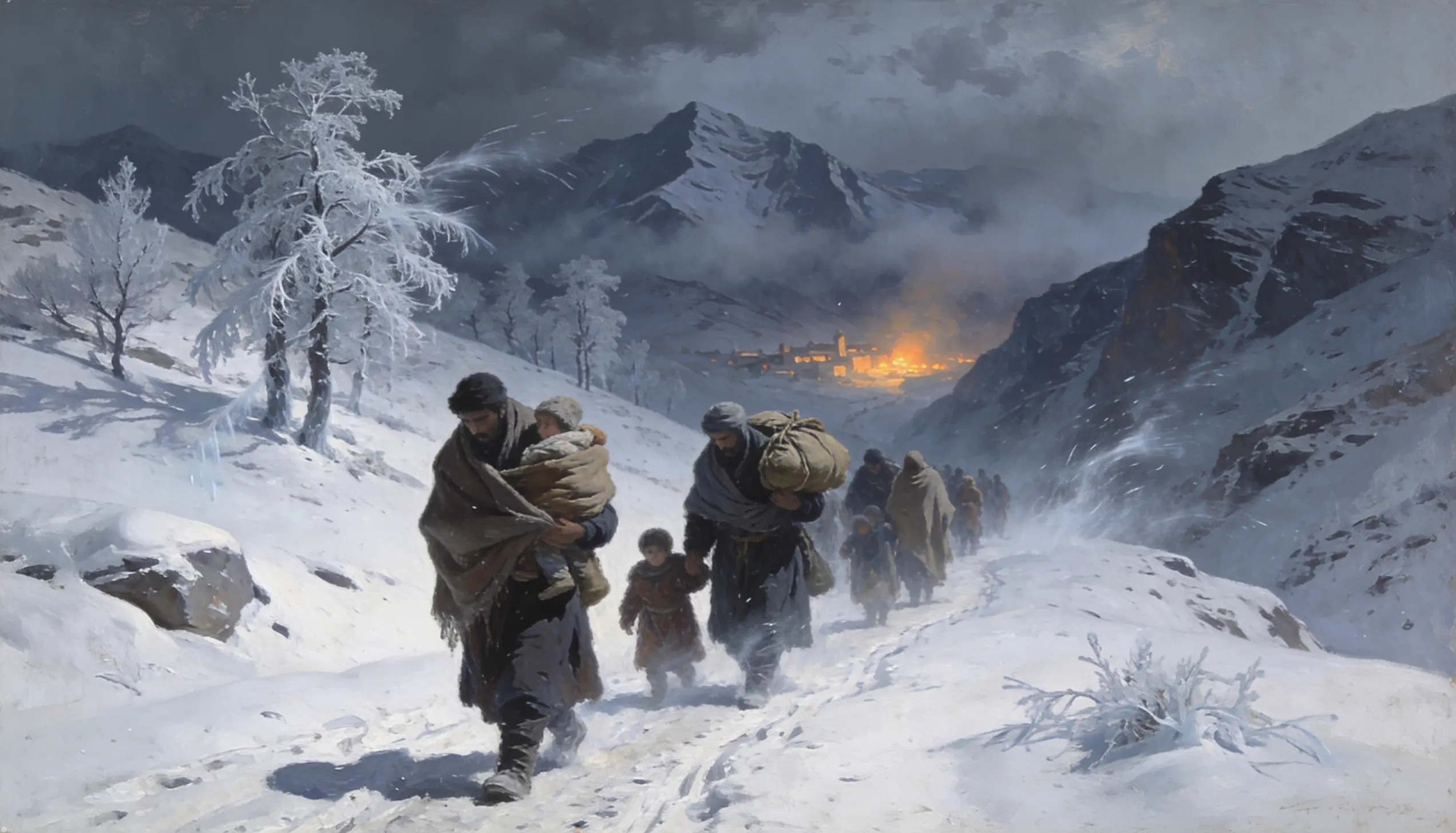
What followed was a horrific campaign of massacres, looting, and deportations. On January 2, 1915, an exodus of 10,000 Christians fled into the bitter winter, trudging across ice-covered mountain passes toward the Russian border. Eyewitnesses described a “great river of fugitives” where exhaustion and freezing temperatures claimed the lives of countless elderly and children.
The Reign of Terror (January–May 1915)
For the 25,000 Christians who remained in Urmia, a harrowing four-month occupation by Turco-Kurdish forces ensued. Seeking survival, some 17,000 Assyrians crowded into the American Presbyterian Mission, while another 3,000 took refuge in the French Catholic Mission.
The siege conditions were brutal. Overcrowding and semi-starvation bred deadly epidemics of typhoid and typhus, claiming over 4,000 lives within the mission walls alone. Outside, in the surrounding villages, over 1,000 Christians were murdered outright.
The Winter Flight
Urmia, January 1915
Key Takeaways
- 1 10,000 Christians fled during the first exodus in January 1915.
- 2 The freezing winter conditions caused massive casualties among the young and elderly.
- 3 20% of the Urmia Christian population perished within just four months.
Primary Testimonies of Brutality
The surviving testimonies recorded in The Treatment of Armenians in the Ottoman Empire (the Blue Book) outline a systemic and vicious eradication campaign across the Urmia plains:
- The Massacre at Gulpashan: On February 24, 1915, one of the wealthiest Assyrian villages was attacked. 79 men and boys were tied together, marched to a cemetery outside the village, and executed.
- The Executions at the French Mission: Defying the sanctuary of the French Mission, Ottoman authorities seized 48 refugees, including the Syrian Episcopal Bishop, Mar Dinkha. They were bound and shot dead at the mountain’s edge.
- The Slaughter at Ismael Agha’s Kala: Sixty Assyrian Christians used as forced labor for telegraph wires were led into a rocky gorge and massacred. Witnesses later found over 70 bodies, left to the elements.
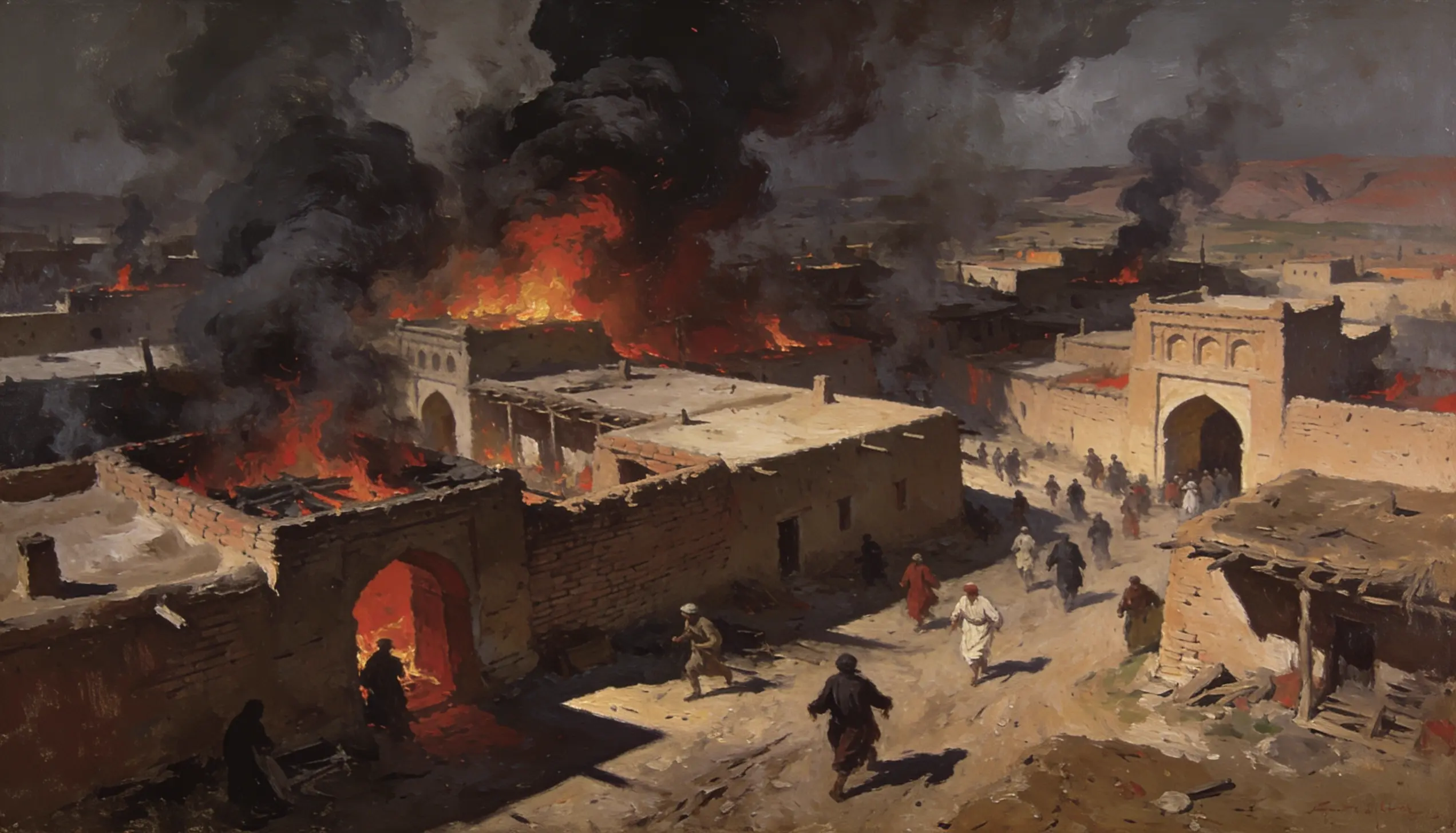
- The Martyrdom of Dr. Shimmun: In Supurghan, an American doctor who had previously treated Turkish wounded was captured. Refusing forced conversion, he was covered in oil, set ablaze, and shot as he fled the flames.
The Martyrdom of Dr. Shimmun
Supurghan, 1915
Key Takeaways
- 1 Dr. Shimmun, despite treating Ottoman wounded, was targeted for his faith.
- 2 He was subjected to forced conversion demands before his brutal execution.
- 3 The targeted killings systematically eliminated local community leaders.
The Second Exodus and Aftermath
In late May 1915, the Russian army re-occupied Urmia, offering a brief respite. But by August 5, rumors of a second withdrawal triggered absolute panic. The entire surviving Christian population abandoned their homes, marching northward for weeks. Thousands more succumbed to cholera, starvation, and exposure before reaching the safety of the Caucasus.
The Assyrian Genocide in Urmia remains one of the darkest, yet frequently overlooked, chapters of early 20th-century history—a systemic eradication documented not just in numbers, but in the chillingly detailed accounts of its survivors.