Introduction: The End of Ionia
For nearly three millennia, the coast of Asia Minor was a vibrant heartland of Hellenic culture. Cities like Smyrna (modern-day Izmir) were cosmopolitan hubs where Greeks, Armenians, Turks, and Europeans lived in relative coexistence. However, the terminal decades of the Ottoman Empire saw the rise of a brutal nationalist ideology that sought to homogenize the state through the systematic erasure of its indigenous Christian populations.
Between 1913 and 1922, an estimated 900,000 Greeks from Pontus, Thrace, and Ionia perished. The climax of this genocide—and the final destruction of Hellenic Asia Minor—was witnessed and meticulously documented by the United States Consul-General, George Horton, in his seminal 1926 book, The Blight of Asia. The timeline of these atrocities reveals a terrifying pattern of escalation, moving from sporadic massacres to industrialized ethnic cleansing.
1. Early Massacres & The Hamidian Era (1822–1914)
The nineteenth and early twentieth centuries were marked by recurrent violence against Christian minorities in the Ottoman Empire, setting the precedent for the total exterminations to follow. What began as retaliatory massacres during the Greek War of Independence evolved into systematic campaigns under Sultan Abdul Hamid II and the later Young Turk administration.
The Prelude to Genocide
A timeline of 19th and early 20th-century massacres
“The Saloniki army revolts at the instigation of the Young Turks’ ‘Committee of Union and Progress’… By 1910, wholesale arrests and daylight assassinations of prominent Greek and Bulgarian community chiefs are carried out in Macedonia to solidify the ruling race’s supremacy.” — George Horton, The Blight of Asia
2. Deportations and World War I (1915–1917)
Under the cover of World War I, the Ottoman government launched its most devastating campaigns. While the Armenian Genocide reached its peak in 1915, the Greek populations of the Black Sea coast and Asia Minor were simultaneously targeted for deportation and destruction.
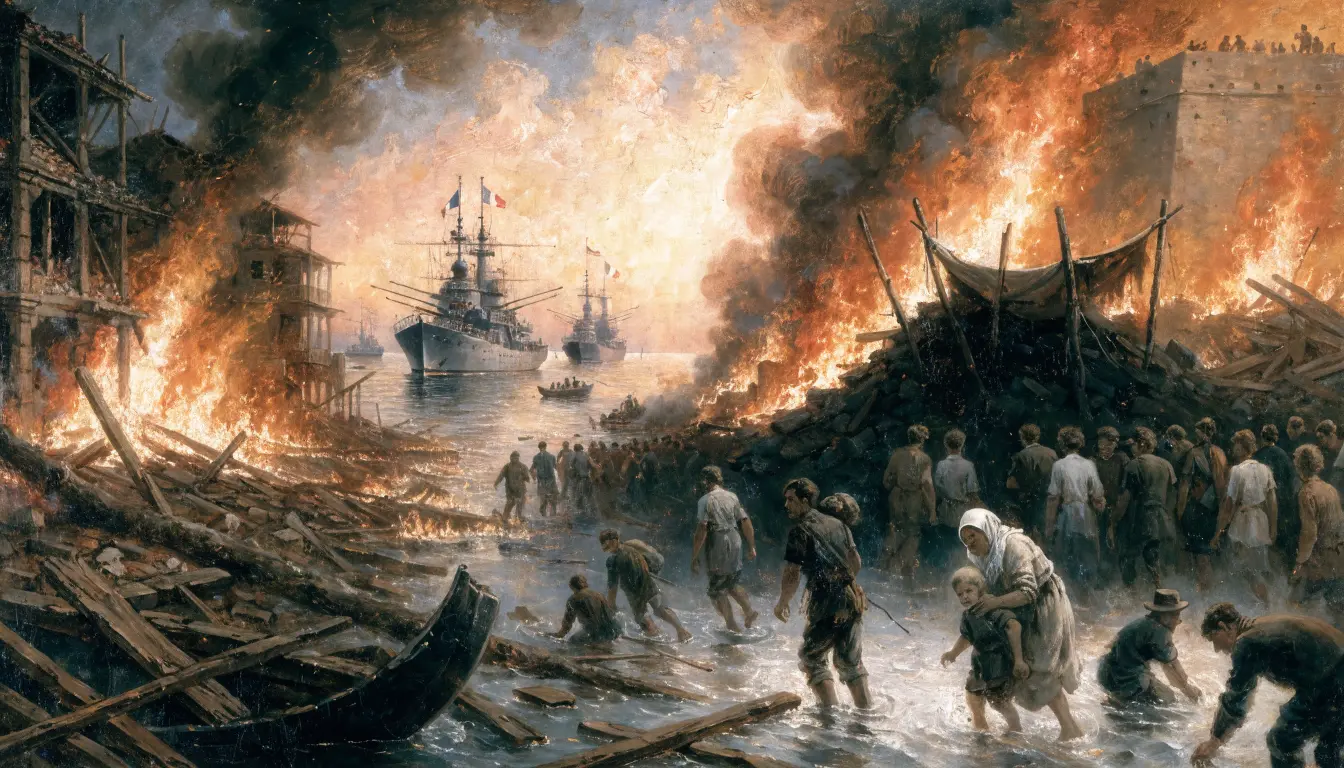
In January 1916, the systematic deportation of Greeks from the Black Sea coast commenced. Thousands were forced on death marches into the interior, dying of exposure, starvation, and exhaustion in the snow and mud. George Horton, stationed in the Near East, observed the increasingly organized nature of these campaigns.
George Horton & The Documentation of Terror
Observing the escalations
Key Takeaways
- 1 Spring 1915: Armenian men in Sivas are summoned, tied, and sent off never to return.
- 2 January 1916: The deportation of Greeks from the Black Sea coast begins.
- 3 May 1917: A second wave of deportations strikes the Armenians and Greeks of the Black Sea region.
By 1917, the situation had deteriorated so severely that the United States, receiving harrowing reports from its diplomatic corps and missionaries, officially severed diplomatic relations with Turkey.
3. The Greek Occupation & The Destruction of Smyrna (1919–1922)
The aftermath of World War I saw an attempt by the Greek army to secure Ionia, landing at Smyrna in May 1919. However, the subsequent Greco-Turkish War ended in catastrophe. In August 1922, the Khemalist forces routed the exhausted Greek army, leading to a chaotic retreat. On September 8, 1922, the last Hellenic soldiers departed Smyrna, leaving the vast civilian population utterly defenseless.
On September 9, Turkish cavalry entered the city. Within days, systematic looting and the hunting of Armenians and Greeks began. American Marines and civilians were severely beaten by Turkish soldiers.
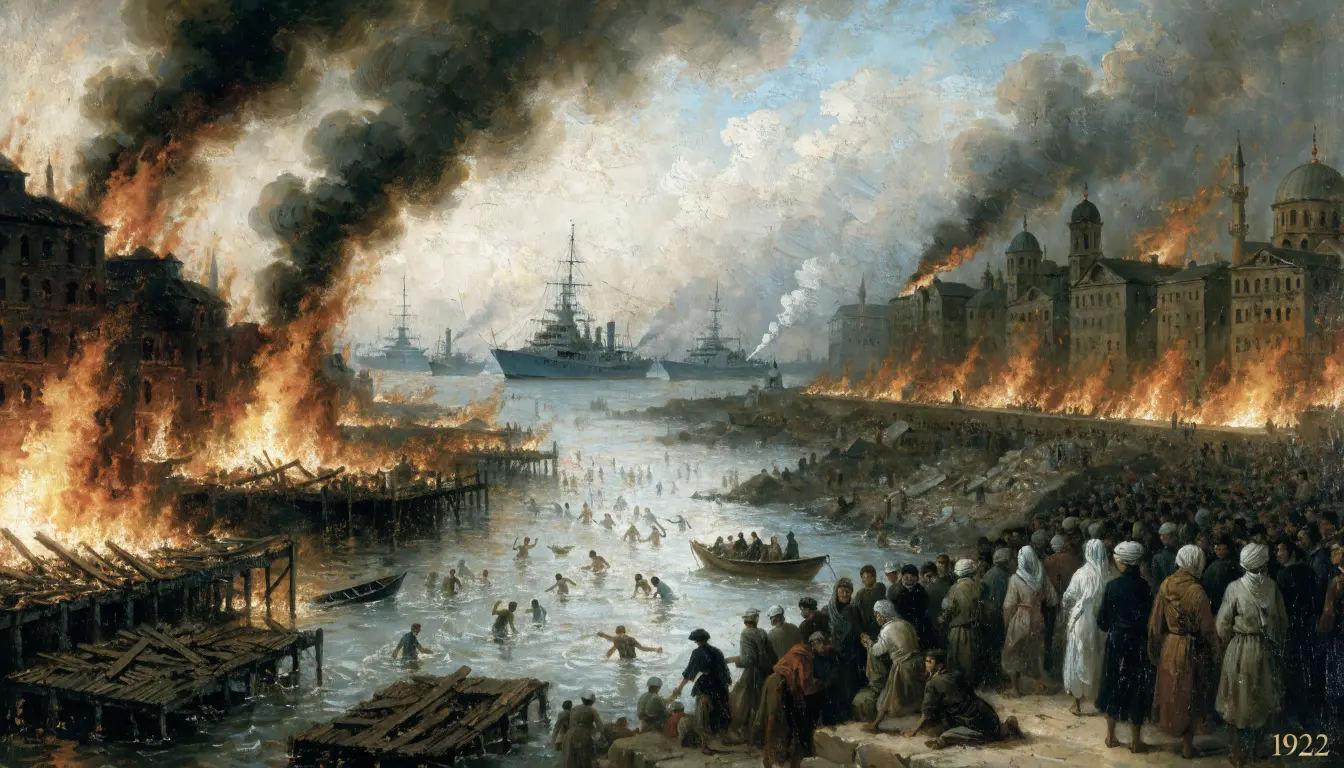
The Inferno on the Waterfront
September 13–14, 1922
Key Takeaways
- 1 September 13: Turkish soldiers methodically set fire to the Armenian quarter using petroleum.
- 2 Hundreds of thousands of refugees were trapped between the burning city and the sea.
- 3 September 14: Charred bodies floated in the harbor as refugees were burned alive or drowned.
“One of the keenest impressions which I brought away with me from Smyrna was a feeling of shame that I belonged to the human race… The screams of the women, the wailing of children, the desperate people throwing themselves into the sea—it was a vision of hell.” — George Horton, The Blight of Asia
Conclusion: The Final Eradication
The burning of Smyrna was the culminating act of a decade-long genocide. The timeline documented by George Horton and other observers reveals that the destruction of Hellenic Asia Minor was not a chaotic accident of war, but a deliberate, phased eradication. Through boycotts, massacres, deportations, and fire, the 3,000-year Greek presence in Ionia was violently extinguished, leaving behind a legacy of trauma that persists to this day.